Showing posts with label Vincent Kathir. Show all posts

Saturday, December 10, 2022

Day 15: Love, Honour and Law: A roundtable on draft legislation on crimes in the name of honour

On December 9, 2022, 15th day of the 2022 Prajnya 16 Days Campaign Against Gender Violence hosted an online roundtable discussion on the draft bill on 'Prevention of Crimes in the Name of Honour' that is being shared by Vincent Raj K. for debate in the Tamil Nadu Assembly. Seeing this as a national issue, a panel of discussants from around India was invited. Shalin Maria Lawrence facilitated the session. You may find a saved copy of the recording here.
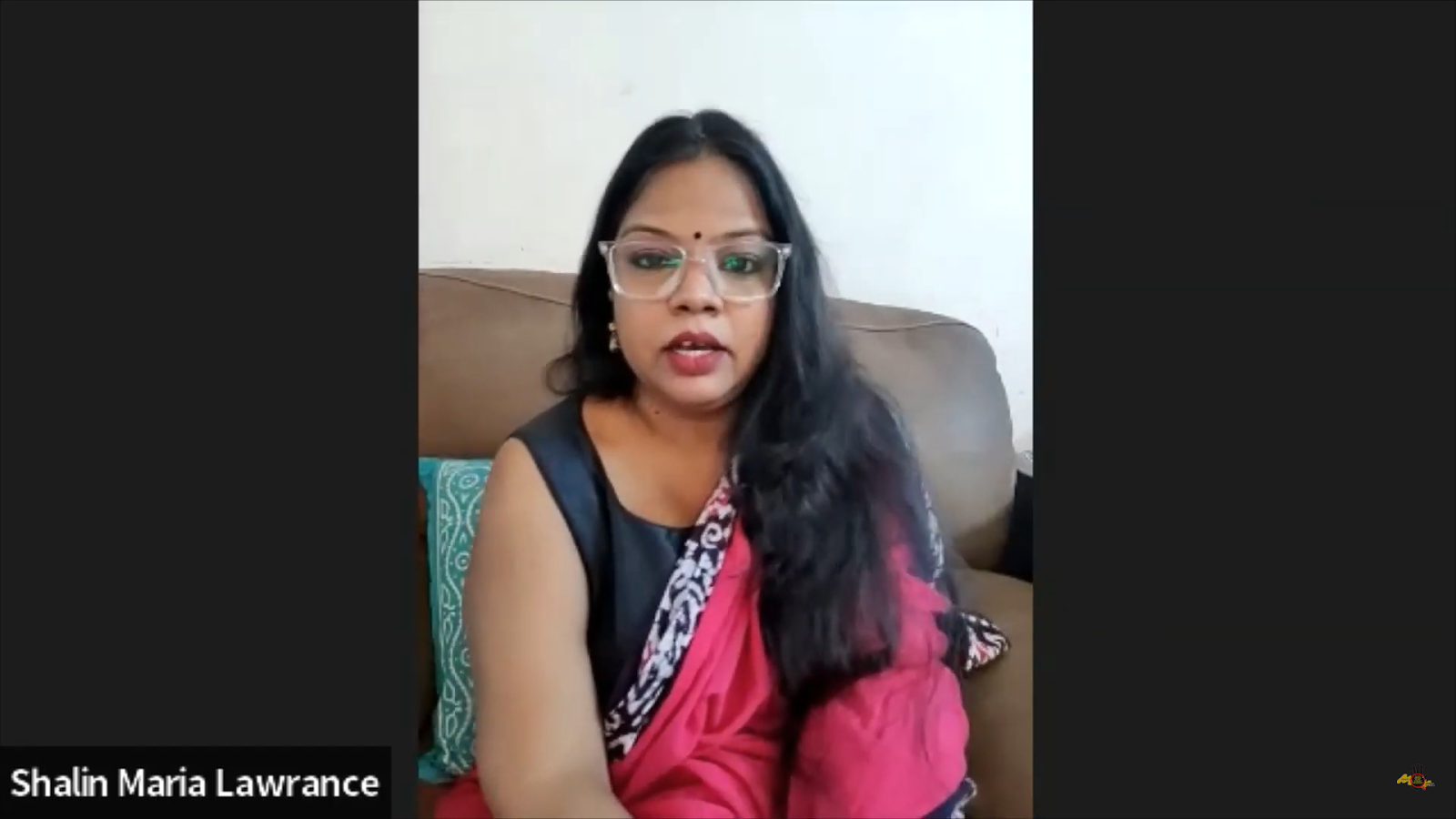

"As a person from the marginalised community, the Dalit community, Tamil Nadu has been a welfare state more than a progressive state, in terms of state. And, I talk with data - we have the social and economic indicators.", said Shalin Maria Lawrence, as she opened the discussion. She added that, "If you compare with the honour killings in UP, Madhya Pradesh, or in the northern parts of the Hindi belt of India, the nation does not know the number of honour crimes which happen in Tamil Nadu. For example, the inter-caste marriages is only 1%, or less than 1% in Tamil Nadu. You can call yourself a Periyar land, or a very progressive state, but then, why is your inter-caste percentage very, very less? So, the amount of inter-caste marriages is directly proportional to the violence happening on inter-caste couples."


Kathir Vincent Raj, Evidence:

  • "Honour crimes are taking place all over India. Honour killing, honour torture, honour humiliation, mob violence for the sake of arrogance, etc are taking place here. I would like to begin by thinking loudly and raising a question on our usage of the term honour. We call honour crimes as honour crimes because they are committed with an aim to protecting the honour of the family...I think it is time we shake this regressive idea from its roots and rather call it dishonourable."
  • "This bill, first and foremost, seeks to offer protection against victimisation in the name of honour. In the instance of such a crime, the bill outlines the extent of punishment to be given to the perpetrators and the compensation and rehabilitation to be given to the survivors. It also details the protective measures to be implemented, apart from detailing the various kinds of victimisation like murder, social and economic boycotts."
  • "I am pointing out that not just caste but patriarchy also plays a role in the killing in the name of honour; this draft bill is also about gender justice."

Abirami Jotheeswaran:

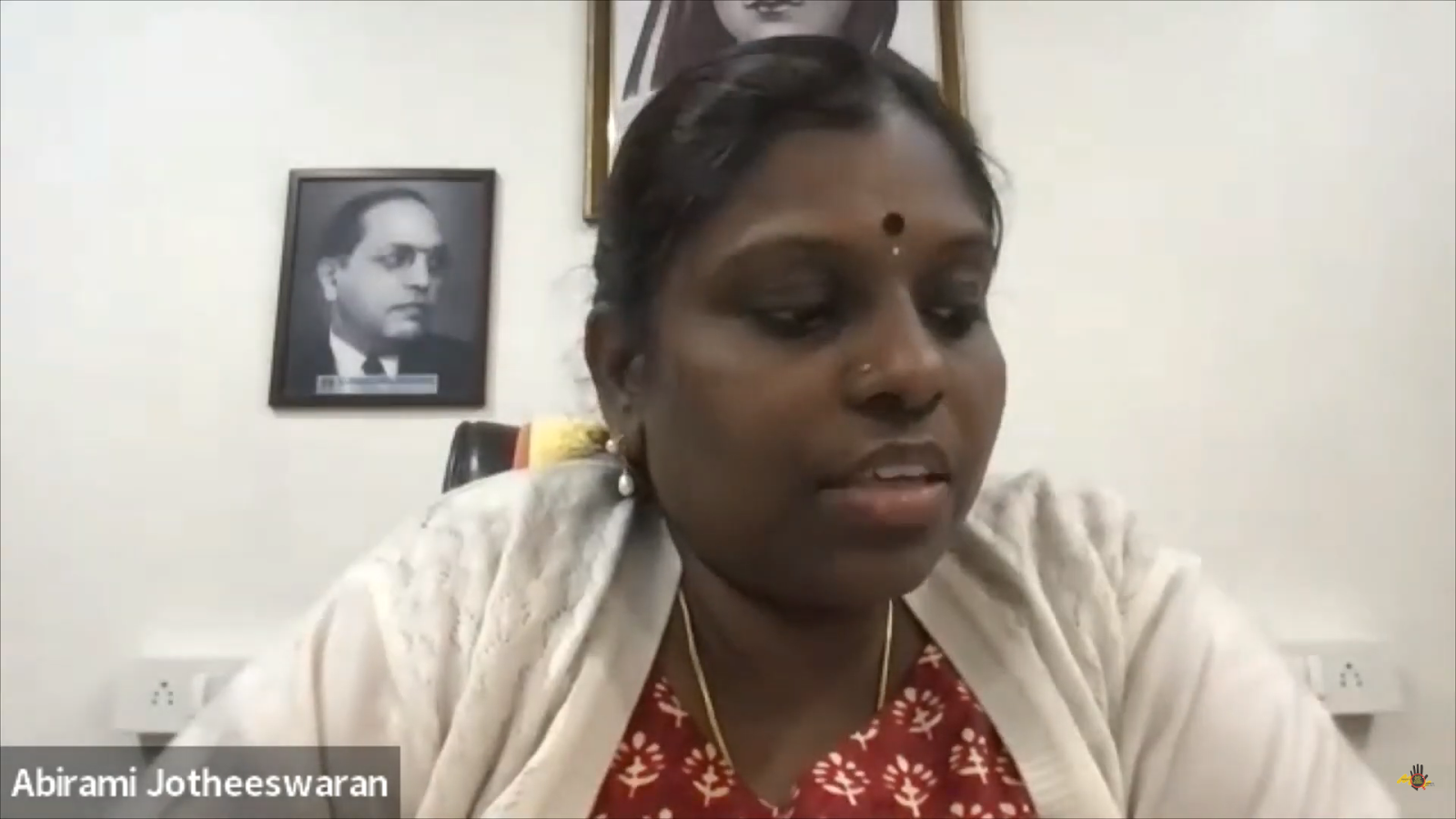
  • "Coming back to patriarchy, I would like to link it to caste and gender hegemony - how is this impacted? We all know that there is intersectionality in terms of caste and gender. Here, Dalit women are at the bottom. They don't have any rights or privilege, and if they are involved in these activities, then, we have been seeing lot of cases of murders, not just in Tamil Nadu, but all over the country."
  • "In reality, (we have to see) how many cases are reported, how many cases are suicide cases, so many cases are made to be an attempt to rape and has been booked under false charges. These are the situations that I would like to point out."
  • "I would like to give some suggestions (on the draft bill). One is mental trauma. Whatever the shelter home the woman is accessing, the status of the mind is very, very bad. They (women) cannot trust anyone. When parents become the culprits, then definitely they cannot believe anybody. So the mental trauma - how to handle it, how to counsel them, these aspects have to be covered. Secondly, police inaction. Police is not acting and taking the bribe...When there is negligence in the duty of the police, there should be some punitive measure...And, I would also say that there should be a national authority who are taking up the monitoring and better implementation of these kinds of legislations. So, I would like to focus on these three things."

Suresh V:
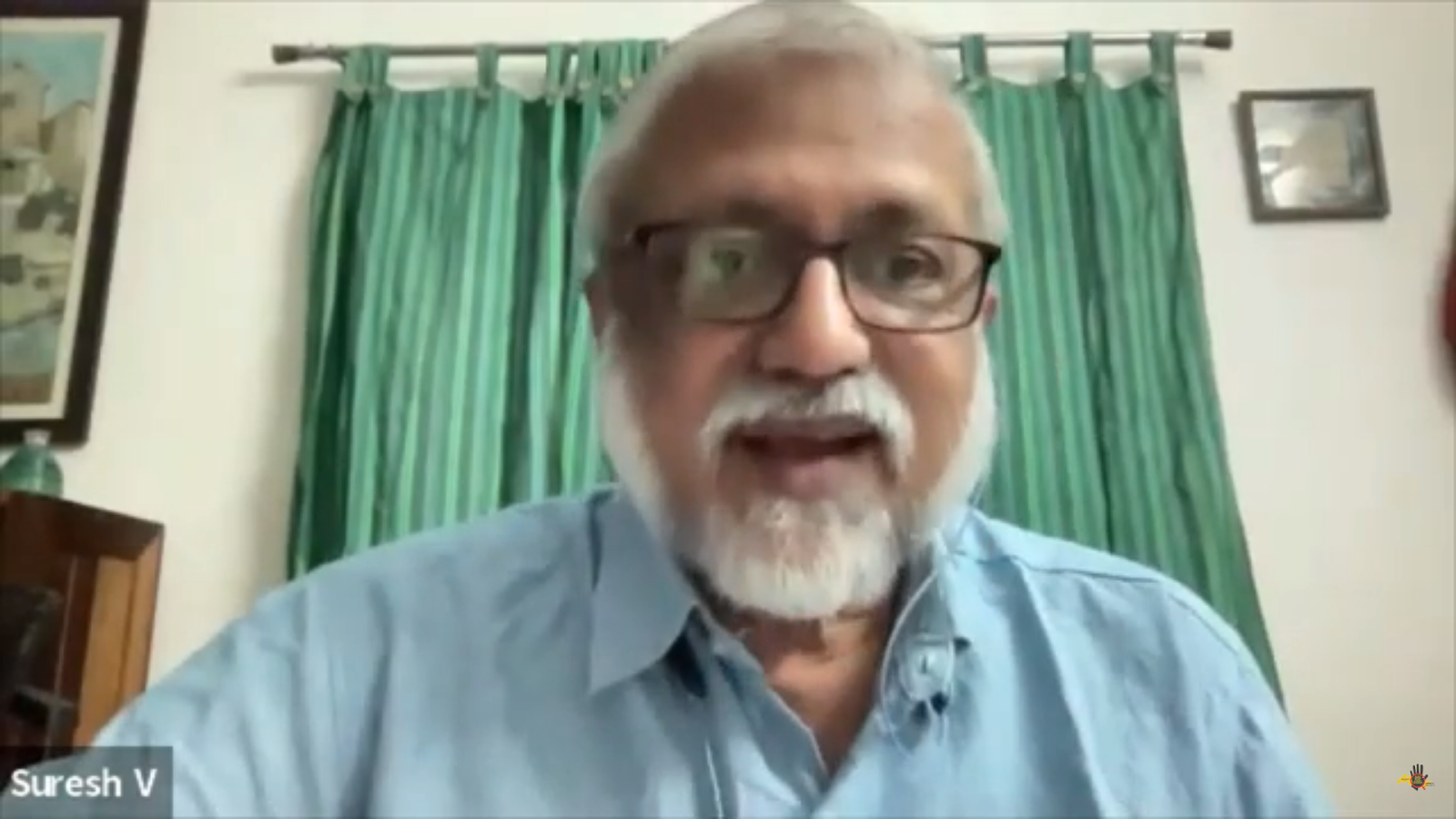
  • "The role of culture and the role of patriarchy gets intertwined with gender identities. And, how this plays a very, very big role in whether a person can live or now, and how they can live, and how they will have to survive. And that is at the bottom of the issue underlying the larger issue of honour killings."
  • "Fundamental to the issue we are talking about is the issue of choice. The choice exhibits itself in multiple ways."
  • "We need to look at this law a little bit more carefully in terms of what has worked and what has not worked with regard to SC and ST (POA) Act."
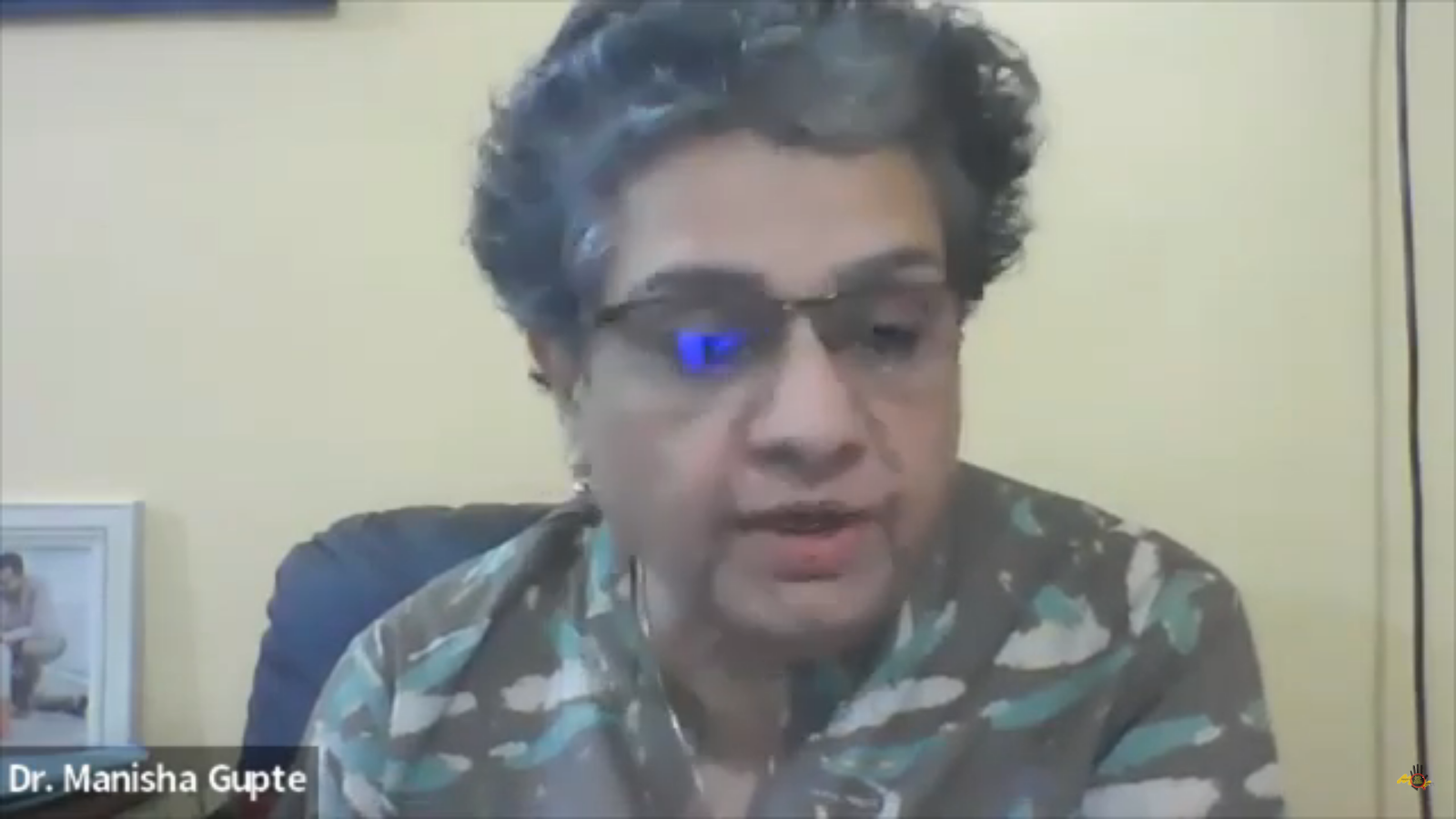

Dr. Manisha Gupte:

  • "I just want to say this loud and clear, that a victim can never be theirs. And the rapist can never be ours. But imagine, when rape happens, people take that position. Now imagine when a girl or a boy marries against the wishes of the family."
  • "In a country, the mere identity itself can become a point to kill, that itself allows punishment, that itself allows punishment by the police...So we know just the identity can be an issue. So then, what happens when you exercise your choice? To do something further by saying I am associating with someone who is from this identity? So then, we have to go to the basic question of identity...Identity comes as a part of our mobility from a very controlling system where nobody in the family has an identity except the patriarch."


--

Shalin Maria Lawrence (Moderator): Shalin Maria Lawrence is a social activist, Intersectional feminist, writer and orator. Belong to the oppressed community, she has been working towards empowering the Dalit Women and LGBTQ+ since 2012. She has worked with the Transgenders Rights Organization and has won the "Day of compassion" award from the Jane Goodall foundation. She has been working with the Dalit communities of the north Madras region, especially in and around Vyasarpadi where I has helped in the setting up of libraries, conducting campaigns and awareness programs towards Education and child rights from 2015. She has also been working with the Dalit women and children in the Dharavi Region of Mumbai since 2016. She has set up a library and has been conducting awareness workshops on women's rights and leadership and the annihilation of caste. For the last two years, she has been conducting regular workshops and training on violence on women, women rights and women leadership among the rural dalit women in and around Madurai and Chennai. She is a writer in English and Tamil and currently publishes her articles in popular magazines and news websites.

Kathir Vincent Raj (Presenter): Kathir Vincent Raj has been working in the field of human rights for over 25 years. A Dalit himself, his witnessing and experiencing caste based discrimination from his childhood triggered his determination to fight against the caste system and caste based atrocities against Dalits. From an initial career as a writer on the experiences of the socially marginalized, he later shifted to rights based interventions, especially human rights monitoring and legal and advocacy interventions. This work experience and a commitment to Dalit rights eventually led him to initiate an independent organization, Evidence in 2005 to fight against caste discrimination and for social justice and equality.

Ms. Abirami Jotheeswaran (Discussant) has been associated with National Campaign on Dalit Human Rights-NCDHR, New Delhi, India since December 2005. Presently Ms. Abirami Jotheeswaran has been serving as the General Secretary of All India Dalit Mahila Adhikar Manch-NCDHR, New Delhi. She herself hails from Dalit Community, very actively involved and committed towards the empowerment of Dalit community. Abirami is a post graduated in Computer Science from University of Madras. Currently, she is pursuing her final year Law degree. Placing her in the organization, her primary responsibilities is to Plan, Monitor and Execute Programs related to Promotion of Dalit Women Leadership and Addressing Violence against Dalit women and minor girls in 7 States across the country. At the international level Abirami Jotheeswaran participated in World Social Forum 2007 held at Nairobi, Kenya and South Africa in 2007, to raise the Dalit concern in the forums. She raised her concern on the Police atrocities committed against Dalits and Dalit Women in 18th EU-NGO Human Rights Forum 2016, Brussels. Abirami Jotheeswaran, actively raised the issues related to Violence against Dalit women and the impunity subsists in India in the 41st UN HR Council at Geneva in the month of July 2019. Under her leadership, AIDMAM recently published a Status Report 2021 - “Dalit Women Rise for Justice” with the confidence that the report will be useful to the government while taking steps to improve Dalit Women’s condition in India through effective implementation of the existing Acts and policies.

V Suresh (Discussant): V. Suresh is a lawyer, Madras High Court; National General Secretary, People's Union for Civil Liberties (PUCL) one of Indias' oldest and largest national level human rights organisation. Earlier served as Supreme Court appointed Adviser on Food Security for Tamil Nadu. Worked for 7 years as a full time activist with the Kashtakari Sanghatana (in Maharashtra) amongst Warli Adivasi marginal farmers and agricultural labourers. Recently appeared in Kannagi - Murugesan Honour Killing case for murdered Dalit Murugesan's family before the Madras High Court.  On June 6th, 2022, the Madras HC confirmed the conviction of Kannagi's father, brother and other relatives belonging to Caste Hindu community invovled with the killing, though the HC commuted the death penalty of brother to life sentence.

Dr. Manisha Gupte (Discussant): Dr. Manisha Gupte has been part of the women's movement in India since the mid 1970s; She has also been an activist in the health and civil rights movements. She studied Microbiology (MSc) and then, Sociology. Her PhD thesis was on the concept and practices of patriarchal honour, and how it intersects with caste, sexuality, violence and the agency of subordinated women. She co-founded MASUM, a rural women's organisation in 1987, after living in a drought prone rural area for five years, and has been its co-convenor since then. She spent one year (1997-98) in the Dept. of International Health at the Johns Hopkins University, Baltimore as a visiting fellow. She is actively associated with progressive organisations nationally, regionally and internationally as an advisor, board member or trainer (especially on gender, violence, sexuality, CEDAW and ESC rights). She has participated in, and promoted campaigns related to women's health; reproductive, sexual and minority rights; and, violence against women. She has worked on policy issues with the state and central governments in India over the past three decades. She is the Managing Trustee of Medico Friend Circle (MFC), a 40 year old autonomous health professionals’ group in India, and was the coordinator of the '10th International Women and Health Meeting (IWHM)', held in New Delhi in September 2005. She also coordinated the process towards the preparation of 'The Indian Women’s Health Charter'. She has co-edited a book (2102) titled ‘Honour’ and Women’s Rights: South Asian Perspectives. This book includes 15 papers, highlighting complementary feminist positions from seven countries.


Saturday, December 11, 2021

Day 16: Regional Perspectives on Honour, Violence and Women's Rights: A Panel

The final day of the Prajnya 16 Days Campaign Against Gender Violence was on Regional Perspectives on Honour, Violence and Women's Rights: A Panel Discussion. We closed with a panel that depicted how violence in the name of 'honour' transgresses borders. Here, pride takes the front seat, thereby justifying gruesome killings, often with the support of the state's machinery. 

Our facilitator of the session, Kiran Moghe, opened with how "the question of women's honour is tied up with the community and she represents the community/ collective honour, which has a bearing on her everyday life; she is subject to several kinds of restrictions on her basic freedom and on her basic right to life. These are very fundamental questions related to our existence as women."

Our first speaker, Jagmati Sangwan addressed the manner in which the state and its units have failed to address the brutality that is honour crimes, with a focus on the ground realities in Haryana. 

  • "Usually common people around us take honour killings and honour crime as due to generational gap of ideas, parents losing control over their sons and daughters-in-law But our experience is that there has been a whole political economy attached to this issue. The political economy is to maintain the hierarchical social structures and cultural norms in the society. The control of female sexuality is crucial in patriarchal setups and hegemonic societies. If the women exert their choice in the issue of marriage, there is a seed of formation of an egalitarian society coming into existence as a result of these marriages. This concern, we feel, has been given the name of honour to control the sexuality of women. This is the crux of this issue."
  • "The major distortions made here to punish these couples is by tampering the birth certificate and showing the couple as underage, and registering cases of kidnap and rape against boys. The human rights protection agencies have delayed and ineffective responses. The judiciary here doesn't take suo moto cognisance of such cases. Most social organisations and NGOs avoid speaking on such issues because they fear and targetting."
  • "The nature of this violence, like dowry, is where one's own people get involved in crime and killing, maybe under huge social pressure. So, nobody comes out to register the case. The judicial system needs witnesses and proof of the crime. The onus has to be shifted on the criminal.

Watch Jagmati Sangwan's video here. 

Vincent Kathir, from Evidence, was our second speaker. He highlighted, through heart-wrenching anecdotes how the state, at various levels have failed to accurately report these crimes.

  • "From my experience, honour crimes are the product of structural patriarchy, male chauvinism as well as caste."
  • "In an RTI filed for the number of honour-related crimes show fifty-five cases of honour killings, but the Tamil Nadu government says there are only four cases in the last five years. Since 2005, when we started working on honour killings-related cases, [we have seen that] honour killings happen across the state and 60% of the time on women."
  • "We tried to challenge every honour killings legally but we have succeeded in a few cases...We cannot expect the government to show interest that the families would. In some cases, families are hostile, and in some cases, they come to a compromise."
  • "In my opinion, in the field, I have worked in human rights since 1995, and since 2000, I began working with honour-related crimes - this is a terrible and brutal form of murder. A few years back, the Supreme Court said that states should file an affidavit. Only twenty-two states accepted [that there is a presence of honour killings in the state], but till now the Tamil Nadu Government has not accepted that there are honour killings here. This is a dangerous situation.
  • "In 2019, Madras High Court, in suo moto regarded our Evidence report on honour killings and then ordered the government to respond. Immediately, the state government responded in front of the High Court that all districts will have a protection cell formed for inter-caste couples. I verified this a month ago. Out of 38 districts, only 3 districts have formed the cell. The other 35 districts have not formed the protection cell."

Watch Vincent Kathir's presentation here.

The third speaker, Benazir Jatoi, highlighted the perspectives from Pakistan showing the commonality of this issue across borders.

  • "You talk of caste, caste is the excuse used. We may not have an obvious caste system, but we use other words. We use religion. We use gairat, which roughly translates to honour. It is the socio-economic guise that we give on how we control women through violence and discrimination."
  • "The irony in the whole situation is that we keep fixing the law till the situation is perfect. Every time a case of honour crime catches the public eye, the lawmakers perfect the law so that the loopholes identified by activists are closed. 
  • What the laws failed to recognise, and laws are limited, the trial judge doesn't have that capacity, with all due respect, to separate honour from murder."
  • "When we use the word honour, we, as activists have no other language. We use the language of our community. If we use honour before killing, we have already given them [the society] one justification to get away with it. Honour is a justification...so dishonour is perhaps the language we should walk towards. Because, we must take away that justification that is the stranglehold of all this."
  • "In Pakistan, the Penal Code is intertwined with the Islamic law....we allow [for the existence of] certain Islamic laws which are forgiveness and compromise....Forgiveness is a very big part of religion. What they don't take into account is that forgiveness before the crime is also a very big part of religion. But, here once a crime is committed, forgiveness is invoked."
  • "While we talk about violence against women and honour crimes, in particular, what we need to address is what is the relationship of women with the state. I feel, if there is a relationship with the state that women have, it is indirect. Women don't have a direct relationship with the state. If that relationship exists, it is weak, and that relationship is breaking down. When there is a weak and indirect relationship, things like COVID-19 has highlighted that anyone already discriminated against will be discriminated against further. Anyone prone to violence will be much more prone to violence."
  • "We don't talk about sexuality [like the first speaker highlighted] enough but it comes down to that. Why do we fear sexuality so much? Why does patriarchy make us fear sexuality.? It starts from the control of sexuality. It is a box that we belong in. But, they tell us that we should exercise our sexuality because we should give birth, and give birth to many children.....but that sexuality is feared when we exercise it. It is different when someone else controls it. Sexuality needs to be viewed from the point of view of the global south."

Watch Benazir Jatoi's presentation here.

Our final speaker was Shalini Umachandran who highlighted the importance of sensitive reporting in cases of gender-based violence, especially honour crimes.

  • "Very often, how the survivors or victims were affected as human beings are erased from the reports. We need to hear about how drastically their lives change and how shocking it is."
  • "What we call honour killings is not just limited to patriarchy, gender, caste but also about personal choice. It is about a society that doesn't respect personal economic and political freedom. We need to widen our understanding and reporting so that all of this comes into it."
  • "It is not just inter-religious or inter-caste. In India, it is about any two people from the same subgroup that isn't approved, and so they send clans."
  • "It is this refusal to accept and understand the need for personal freedom which we see at a personal and family level; it is spread much wider. We see it in government policies, in the toxic bigotry we see in our daily life and on social media. It is not just a family issue."
  • "Most underreporting is by the state and not the media or Civil Society Organisations. Journalists do cover these in detail and CSOs do a lot of reporting. In the last few years, it has become more detailed, careful and in most cases, a lot more sensitive. But we need to be mindful of how we speak, behave and the language we use in newsrooms when we speak with friends and our attitudes so that people can make their own decisions and don't have to follow archaic rules."
  • Some of the Dos given by her were "If you're interviewing a survivor, make them comfortable. Get their consent before quoting them. You will go by their decisions on how much detail you will go into. It is possible to have a perfectly accurate report without being intrusive and causing more trauma to someone. Keep your tone empathetic and neutral. Keep the organisation that helped you get in touch with survivors about the progress of the story." while a couple of critical points to take note of are "Don't make promises because you know you can't keep them...Don't share contact details without permission."