On the 14th day of the 2022 Prajnya 16 Days Campaign Against Gender violence, we organised the "Domestic violence and access to justice: regional perspectives" panel discussion. South Asian states have passed laws on domestic violence but survivors still struggle to access justice. This panel brought together the experiences of Bangladesh, Pakistan, Sri Lanka and India. Watch a saved copy of the recording here.
Panelists: Sara Hossein, Bangladesh Legal Aid and Services Trust; Saba Shaikh, Dastak, Pakistan; Ermiza Tegal, lawyer, Sri Lanka; Shazia Choudhry, Oxford University and Philippa Williams, Queen Mary University of London. The session was facilitated by Suneeta Dhar.
This panel is part of the project Surviving Violence: Everyday resilience and gender justice in rural-urban India funded by the British Academy Heritage Dignity and Violence Programme HDV190009. Research partners: Queen Mary University of London, Chaitanya-The Policy Consultancy, Indian Institute of Technology Bombay, Institute of Development Studies Kolkata, Nari Samata Manch and University of Oxford.

"It almost seems like the COVID pandemic underscored the structural nature of gender inequalities within and across countries, and it essentially brought to light the invisible, unrecognised pandemic of gender-based violence, domestic violence and intimate partner violence. I hate the word shadow-pandemic; I think that domestic violence is not a shadow pandemic. That it was given visibility during this time by the UN and other agencies speaks of how little attention this issue has got over time", Dr. Suneeta Dhar said, as she opened the session.
Shazia Choudhry, Oxford University and Philippa Williams, Queen Mary University of London:
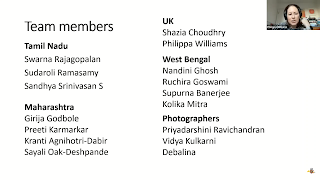
- "PWDVA (2005) encompasses the broader definition of violence; it is not just about physical violence, but also about emotional, psychological, financial and sexual violence as well."
- "There were also problematic attitudes in terms of lawyers, unfortunately. Survivors' opinions about lawyers were actually mixed. In a few cases, survivors found their lawyers to be helpful, didn't charge them high fees and followed up their cases. Survivors who accessed their lawyers through NGOs had fairly positive feedback about their lawyers."

- "There are huge barriers to accessing formal justice. And, as a result, women, therefore, are more likely to turn to the informal mechanisms that actually exist. And, the most commonly accessible and prominent body was the panchayat."
Sara Hossein, Bangladesh Legal Aid and Services Trust
- "I think some of the crucial points about our (Bangladesh's) framework is that although we have this strong, constitutional mandate for equality, we, of course, know that, there lives, alongside, a lot of very contradictory, continuing, persistent discrimination in terms of the legislation, and that we have a legislative framework which inhabits three different centuries."
- "One of the really challenging limits of our legislation, in addition to the exclusions already mentioned about people with disabilities and sexual minorities is the exclusion of divorced women from the ambit of the protection of the domestic violence law."
- "While there is an increased awareness of domestic violence as a wrong, for which remedies are available, there is very little awareness of what those remedies are and very little awareness of where you can go to access services for remedies and protection."
Saba Shaikh, Dastak, Pakistan:
- "Mostly, women in Pakistan resolve issues by going to the locals or elders in the community. If, for example, that doesn't work out, then they will reach out to relatives or friends within the community who can possibly link them to other possible options."
- "Women's rights of freedom and choice and movement are severely restricted in the name of modesty or protection and they consider to epitomize honour and therefore any sort of measure that they take for their rights seems like they are bringing dishonour to the family."
- "Oftentimes there are judicial pronouncements which reflect the negative bias; we have had a lot of cases and judgements where you see the judges are using their own sort of subjective morality instead of really looking at the law."
Ermiza Tegal, lawyer, Sri Lanka
- "During the COVID pandemic, for example, and the lockdown restrictions, we only noticed that advisory services was what was possible. And then, all of the actual services required, even to come out of the house, to come out of your environment of abuse or environmental violence was not possible for women."
- "Sri Lanka also needs to be considered in its socio-political context of violence and impunity so there's a long history of violence, even today, with the Prevention of Terrorism Act being used against protestors in Sri Lanka."
- "Laws are really imperfect tools because they are products of our socio-political systems and we recognise this when we work with it. The Domestic Violence Act sits amongst laws that are very unfair on people, and they don't recognise the experiences of women, like cyber violence, care work is not recognised, abortion is an issue that still needs to be addressed, marital rape is explicitly recognised."
About the Speakers:
1. Sara Hossain is a Senior Advocate at the Supreme Court of Bangladesh, practicing in the areas of constitutional, corporate and family law. She is a partner at the law firm of Dr. Kamal Hossain
and Associates, and also serves pro bono as the Honorary Executive Director of the Bangladesh Legal Aid and Services Trust (BLAST). She is currently a Professor of Practice at SOAS, University of London. She is a Bencher of the Middle Temple. Sara was educated at Wadham College, Oxford (1988), and called to the Bar from Middle Temple (1989), then enrolled in the High Court Division of the Supreme Court of Bangladesh (1992) and the Appellate Division of the Supreme Court (2008). She has been involved in landmark cases and campaigns on gender equality (‘fatwa’ violence discriminatory rape laws,sexual harassment), prohibition of corporal punishment in schools, protection against torture and freedom of expression. Sara has received awards for her work from the Lawyers’ Committee for Human Rights, the US State Department (Women of Courage), ‘Ananya’ magazine (Top Ten), and was selected as a World Economic Forum Fellow and an Asia 21 Fellow.
2. Saba Shaikh is trained as a lawyer and also holds a degree in public policy. She works as a human rights advocate with over 14 years of experience in implementing and improving response strategies for those facing abuse, gender based violence or denial of their fundamental rights through provision of legal aid, training and community awareness. She is currently the Executive Director of Dastak Charitable Trust, an access to justice center for women and children that, among other programs, runs the only private shelter in the country for women and girls at extreme risk of violence. Saba has executed projects for a range of international organizations including Oxfam, Open Society Foundations, DFID, KIOS Foundation, and USAID among others. Saba is an Atlantic Council Emerging Leaders of Pakistan (ELP) Fellow 2012, Asia Society (India Pakistan Young Leaders Initiative) Fellow 2013 and US State IVLP Fellow 2019.
3. Suneeta Dhar is a Gender and Development Specialist with over four decades of experience on advancing women’s human rights. She has worked with community based civil society organizations as well as with international organizations. She is an external member of a few Internal Committees on Sexual Harassment of government and civil society organizations. Suneeta holds a Master’s degree in Social Work from the Tata Institute of Social Sciences, Mumbai, and has been a recipient of the Fulbright and Advocacy Institute Fellowships for Development Practitioners. She has co-authored research studies, training manuals, and papers on women’s safety, gender and SDGs, transformative governance and women’s rights. Suneeta was recognized by Apolitical’s 100 Most Influential People in Gender Policy in 2021.
4. Philippa Williams is research and teaching intersects political, economic and development geography, with a focus on everyday political life in India and its transnational community. More specifically, she interested in questions concerning how the state is experienced, how citizenship is articulated and how marginality, particularly in the context of violence/nonviolence is lived and increasingly how digital technology is mediating everyday political life in India. In the UK research she has also explored the lived implications of the Indian emigration state and the UK government’s hostile immigration policy for recent South Asian migrants.She is Primary Investigator on two live projects:1) Social media and everyday life in India with Lipika Kamra examines how WhatsApp is shaping everyday political life from the family to political party and the nation. The initial phase of this research was funded by WhatsApp. We are now embarking on a second phase focused on lived experiences of digital privacy in India.
5. Shazia Choudhry is Professor of Law and the Jeffrey Hackney Tutorial Fellow in Law at Wadham. She is also an Academic Bencher and Associate Academic Fellow at the Inner Temple.Her research is focused on gender, human rights and violence against women and seeks to examine various dimensions of these areas from an interdisciplinary and feminist perspective. In doing so she employs doctrinal, theoretical and empirical methods. Her scholarship sits at the interface of criminal law, human rights law and family law.She has published three books.
6. Ermiza Tegal has a Masters in Law from the School of Oriental and African Studies (SOAS) in London. She has 15 years of litigating in public law, fundamental rights, land, labour and family law. She has served as a legal expert on State advisory committees on law reform. Her recent advocacy and research work involves law reform relating to family law, domestic violence, protection for victims of torture, counter terrorism and human rights, gender based violence and a people’s land policy. She is a founder member of Muslim Personal Law Reform Action Group advocating muslim family law reforms. She is also currently a visiting fellow with the Harvard Law School Program on Law and Society in the Muslim World and a member of the Feminist Collective on Economic Justice in Sri Lanka.