A Report by Ranjitha Gunasekaran
.JPG)
The Gender Violence-Health
Systems Interface: A Roundtable
As part of
its 2014 16-Day Campaign Against Gender Violence, Prajnya, in association with
Friedrich Ebert Stiftung (FES), held a roundtable discussion on November 28,
2014 in Chennai. The roundtable was aimed at highlighting the gender violence
as a public health issue and the responsibility of health service providers in
identifying, supporting and treating survivors of gender violence. The
roundtable featured presentations by Anuradha Kapoor of Swayam, Kolkata,
Sangeeta Rege of the Centre for Enquiry into Health and Allied Themes (CEHAT),
Mumbai and Dr Rajani Jagtap of the Brihanmumbai Municipal Corporation (BMC),
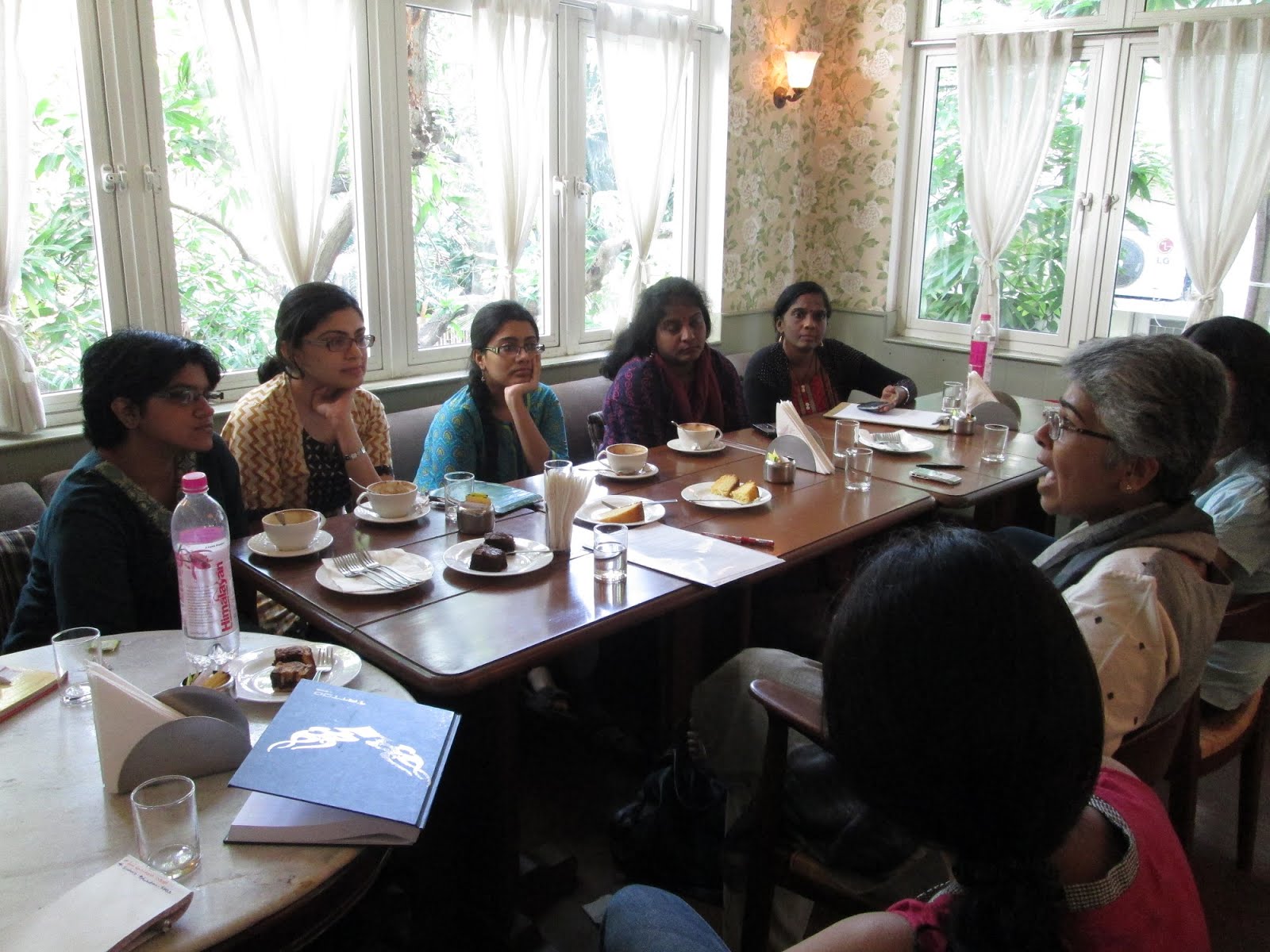
Mumbai. Participants at the roundtable included mental health, medical and
nursing professionals as well as journalists and activists. Each presentation
was followed by a round of questions and sharing of expertise and experiences
by the participants, many of whom looked for guidance on ways in which they
could identify and support persons affected by gender violence within their
realm of work. The vulnerability of women living with mental illness to
violence, the physician’s role in identifying persons affected by violence and
the lack of sensitive training provided to medical and nursing professionals in
dealing with gender violence are some of the issues that came up for
discussion. The out-dated notions describing the physical signs of sexual
assault as in some medical textbooks in India were brought up and the effect of
such misinformation on the quality of service provided to survivors of sexual
violence was highlighted.
Anupama
Srinivasan of Prajnya introduced the speakers of the day and started the
roundtable with a presentation on the importance of seeing gender violence as a
public health issue, while Dr Swarna Rajagopalan of Prajnya introduced the 16
Days Campaign which is in its sixth year. FES was represented by Arti Peter.
Violence against
Women - A Public Health Issue: Challenges and Ways Forward
Anuradha Kapoor, Swayam, Kolkata
.JPG)
Kapoor began
her presentation by introducing the work of Swayam, a feminist organisation
that works with survivors of violence. Swayam supports the survivors through
services that range from legal advice and guidance to counselling. According to
Kapoor, Swayam aims to help a survivor of violence heal in a holistic way. A
great deal of importance is given to mental health support and mental
well-being. “We look at women as survivors who can move to become agents of
change,” she said. Swayam also works to prevent gender violence through advocacy
and community awareness programmes in rural and urban settings.
Kapoor
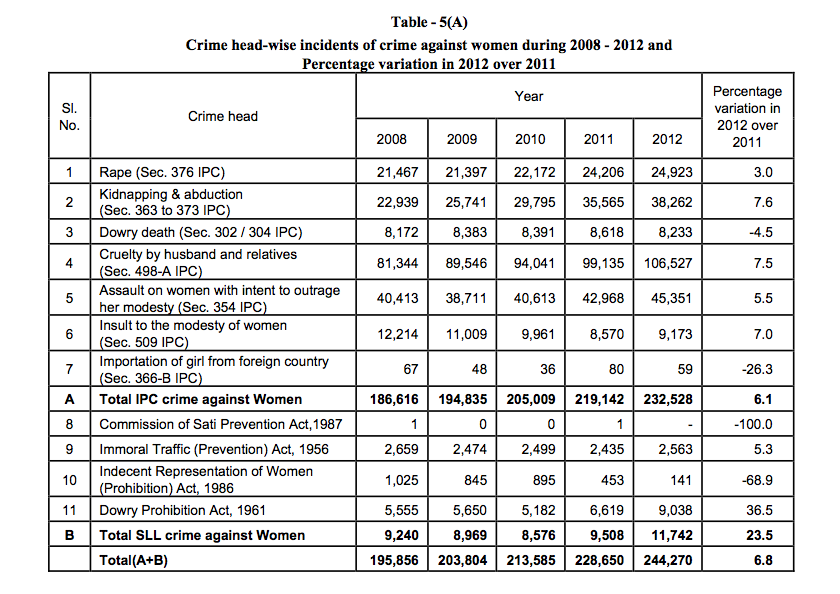
stressed that violence against women was a public health issue. It is
pervasive, affecting one in every three women across the world. Citing National
Crime Records Bureau data from 2013, she said that 11, 700 women were either
murdered or had committed suicide because of violence -- one woman every 45
minutes. Other than death or suicide, such violence can lead to maternal
mortality, HIV/AIDS infections as the person lacks control over his or her
sexuality, injuries or permanent disabilities. Most violence against women is
not reported, she noted, stating that according to the National Family Health
Survey 40 per cent of married Indian women faced domestic violence.
Violence
against women also affects a woman’s reproductive health, causing her to lose
her child, forcing her to seek unsafe abortions or resulting in various
gynaecological problems. Further, there is the pervasive but invisible effect
on the victim’s mental health -- anxiety, fear, stress, anger, low self-esteem,
suspiciousness. Victims even suffer depression leading to suicide or
post-traumatic stress disorder (PTSD). Sometimes, these issues manifest as
psychosomatic illnesses or affect behaviour of the victim.
These issues
demonstrate that violence against women is a public health issue. Health
services are the first resort for a woman facing such violence. Doctors and
hospitals offer a safe space for victims, a space that it is acceptable for her
to approach. However, Kapoor, stated that health services were the weakest link
of all the services available to victims of violence. A victim may hide the
cause of injury because of shame, fear or lack of trust. Health professionals
frequently treat and discharge such victims without making any attempt to find
out how the injury occurred. If her injuries are not recorded, then she will
have no evidence to support her case when she approaches the legal system,
Kapoor pointed out. “The woman needs to be assured that what is happening to
her is wrong. Reassurance is important. And referral to services is very
important. Whether or not the information is used, it is important to give it
to them. For which you need to provide a safe space and privacy and
confidentiality,” Kapoor said. She added that protocols on dealing with sexual
violence for healthcare providers had been released and that similar protocols
were needed to deal with cases of domestic violence.
To help deal
with the psychological effects of violence, Swayam provided its clients with
mental health support. “The outcome of the legal aspects of her case is not in
her hands but she can control herself -- her health and well-being,” Kapoor
said. Swayam offered one-on-one as well as group counselling. The latter was very
effective with providing the woman with a support system, a reassurance that
she was not alone and scale of the problem of domestic violence. Swayam also
organised anger management, parenting and self-empowerment workshops for its
clients. Some of the clients had started their own theatre and music groups to
raise awareness about domestic violence. They also ran a magazine.
Kapoor made
the following suggestions to health service providers for dealing with persons
who may be victims of gender violence.
- Probe
to find the underlying cause of the injury. Be sensitive, create
confidentiality, and provide reassurance
- Use
Information and Communication Technologies to provide reassuring messages
so that victims know that they are in a safe space where they can speak
- Create
a list of services that the patient can referred to and provide patients
with these referrals -- to therapists, legal services, counsellors,
protection officers -- whenever appropriate
- Increase
coordination between different medical departments
- It is
very important that the medical history is written in such a way that it
is supportive to the victim in court
- The
Domestic Violence Act has a specific role for health professionals: They
are service providers and cannot refuse medical assistance. The medical
examiner’s report must be provided free of cost
- It is
important that health service providers are trained to screen patients and
document their findings appropriately. They should be educated on their
roles as described in various laws
- Gender
violence needs to be recognised as a public health issue
The discussion that followed Kapoor’s presentation raised the following issues:
- The
extent to which Swayam worked with the husbands of the women it helped
came up, as did questions of family counselling. Kapoor stated that unless
the woman asked for family counselling, Swayam did not provide such
support. “We are a safe space for women. If we bring men into that space,
it affects them,” she said. Though the organisation worked to promote
awareness among boys and men in communities, she stressed that abusers
were only brought into the conversation when the women asked that they be
included. Some participants suggested, from their experience, that as
leaving a marriage was very difficult for women, the couple be counselled
and the husband warned against further abuse before they are reunited.
Kapoor strongly disagreed with this approach, stating that an organisation
could not be certain that the man will not continue to abuse the woman.
The possibility of such abuse resulting in her death was too high a risk
to late, she said, reiterating that Swayam believed in doing what the
woman wanted to do, and supporting her decisions in every way possible.
Rege added that we need to move beyond the sanctity of marriage. “It is
important to provide an alternative perspective even if she wants to go
back to the marriage, that there is life beyond marriage,” she said.
- A
social worker who worked with women in prisons asked for clarity on the
law regarding women who have murdered their husbands after years of abuse.
Kapoor pointed to the precedent provided by the case of Kiranjit Ahluwalia
in the UK.
- Medical
professionals raised the importance of including the health effects of
gender violence in the curricula. Training on how to identify victims of
violence as well as how to respond to such situations would be welcome,
they said.
- The
lack of media reporting of effects of violence on women was raised. Jaya
Shreedhar, one of the participants and faculty at Asian College of
Journalism, said that she wanted these issues included in the institute’s
health journalism course. She also asked if a training curriculum was
available for staff at fertility clinics, as the patients at such clinics
were often subject to great pressure and stress.
- A
question was raised as to how abuse within a natal family was dealt with,
specifically with regard to transgender individuals. Kapoor said that
Swayam had worked with lesbian women in the past and in such cases,
treated the natal family as the abuser.
- A
provocative question was raised on false complaints given by some women.
Kapoor stated that laws should not be misused but asked why, when almost
every law was misused, the handful of cases of false complaints were
singled out.
Comprehensive healthcare response
to Violence against Women: Lessons learnt
Sangeeta Rege, CEHAT, Mumbai
.JPG)
Rege
outlined the efforts of CEHAT in Mumbai in working with health service
providers. CEHAT worked largely in urban slums and with secondary and tertiary
hospitals. Like Kapoor, Rege stressed that the health system was often the
first point of contact for victims of gender violence. She also said that
health systems, especially at the primary health centre level, were sites where
early intervention and prevention of violence can be promoted. She emphasised
the importance of proper medicolegal documentation as mandated by the law.
Rege’s
presentation specifically dealt with the Dilaasa crisis centre initiated by
CEHAT but functioning through the BMC in Mumbai. Dilaasa involved the training
of health service providers and creation of protocols for the crisis
intervention department. The project aims to use available resources, thus
training nurses rather than doctors. Patients are referred to Dilaasa from the
emergency, outpatient or inpatient departments, usually by a doctor or a nurse.
The project, now 14 years old, has been replicated in the city. An external
evaluation of the project took place in 2009. Rege said that 250 new patients
came each year for crisis counselling. An additional 150 met counsellors but
chose not to continue counselling. Based on studies of the Dilaasa model and
emergency case records, Rege made the following observations and suggestions:
- With 22
per cent of the women who survived abuse being in denial, it was important
that the doctor developed the ability to identify persons who may be
victims
- With 47
per cent saying that they had experienced violence during pregnancy, it
was important to create services that could be accessed by women during
ante and post natal care
- Health
system and hospitals need to provide victims of gender violence with
counselling services
- The
hospital could be a safe space for such women - under Dilaasa they can be
admitted for three days and can use that time to think, and receive
support while deciding their next moves. This was better than moving to a
shelter, and provided the women with a sense of security as their
hospitalisation would not raise suspicions at home
- Violence
Against Women is not recognised as public health issue and is not seen as
fitting a biomedical model, according to Rege. This attitude is most
evident in medical textbooks, some of which continue to perpetuate myths
about sexual violence and feature a fixation on the hymen.
- Further,
there is no standard protocol on medico legal examinations in the country
- Medical
documentation can include insensitive language such as references to the
nutritional status of a woman (as a well-built woman can be assumed to be
able to resist assault). Based on this, the woman’s character becomes fair
game in court. These archaic views have been challenged in PILs
- As per
changes in the law, a survivor can go to a hospital and report abuse,
however there is little awareness about this and the therapeutic aspect of
care in such circumstances has been neglected.
- Medical
examinations are often performed with little sensitivity.
- There
is limited recognition of non-peno-vaginal assault
- Doctors
are frequently ill-equipped to give a legal opinion and are often unable
to separate their legal opinion from their personal opinion
- The
medical fraternity continues to entertain several misconceptions with
regard to sexual assault. For instance the belief that rape always leaves
signs of injuries or that hymenal status is critical to determine sexual
assault. Worse, the elasticity of the vagina/anus is considered a determinant
of assault. This is a new way to incorporating the two-finger test in the
medical examination. Further, absence of medical evidence is seen as
absence of rape. Rege stressed that the context of the assault and other
variables need to be factored into the medical interpretation
Outlining a
model of care to respond to sexual assault, Rege said that hospital-based
crisis centres were needed because several young women access these centres
within two years of being abused, there is voluntary reporting for treatment
and a follow-up rate of more than 60 per cent as visiting a hospital is
socially acceptable.
Health
service providers had two key roles to play towards victims of gender violence.
The first was therapeutic - to provide medical treatment and psychological
support. The second was forensic and involved documentation. According to Rege,
a comprehensive healthcare response to sexual assault would involve:
- Seeking
informed consent from survivor
- A
detailed, sensitive medical examination
- Free
medical support (by law, both private and public facilities must provide
services)
- Psychological
support
- Clear
and fool proof chain of custody
- Referral
to other services
The
following issues were raised in the discussion following Rege’s presentation:
- Counselling
services provided to families of survivors: Rege said that many are not
interested in counselling services though they take the information. This
is challenging because counselling becomes associated with the hospital.
Further, there is the loss of wages that many family members might face.
According to Rege, most who get counselling are those who are also seeking
legal redressal. There is better follow up in cases of domestic violence,
but numbers drop again when suicide is attempted.
- How to
deal with questioning by the police: Police tend to ask doctors questions
like, is the victim habituated to sexual intercourse or is the accused
capable of intercourse, Rege said. CEHAT asked doctors not to answer such
questions and documented them to show the DIG. The response from the
police was either denial or an invitation to provide training Rege said.
Our role in intervention is to be there for the victim in every way she
wants, she added.
- Was
informed consent necessary or did the victim have a responsibility to
report an assault? Rege explained that the central government had released
guidelines on how medico-legal assessment must be done. Informed consent
is important though the concept created fear among health professionals.
Informed consent is the key in increasing the agency of the survivor.
Because of the law on mandatory reporting, Rege added that CEHAT
facilitated informed refusal. “We need to be able to approach healthcare
as separate from legal issues. What are the compelling reasons for
refusal? And are we offering treatment or making it conditional to
reporting?” she asked. Survivors need to be provided time, space, respect
to survivors before they are treated or examined. Informed consent is
particularly important given the amount of power doctors have in a medical
context.
- Indian
law makes the victim a witness in her own case. Kapoor explained how this
often leaves the victim vulnerable. “Because I am witness, i have a right
to lawyer but only if Public Prosecutor permits me. This leads to situations
where there is unequal competition between overworked PPs and defence
lawyers and is hugely problematic thing,” she said.
- Health
systems cannot be islands: Rege points out that there are guidelines on
how doctors can interact with PPs and defend their findings in court.
- “We
need to stop depicting sexual assault as the worst thing that can happen”,
Kapoor said responding to a question on how survivors cope after assault.
While confidentiality is important, we also say that there should be no
stigma attached to victims of sexual assault, and therefore no
confidentiality. However, as long as chastity is valued, and it is
believed that women would rather die than be raped, there will be stigma.
This is a struggle and till then we need to provide support.
- The
lack of guidance for private practitioners in dealing with sexual assault
cases was raised. Rege pointed out that thanks to the new law, the private
sector is awakening to these issues.
- Persistence
of potency tests: Jagtap and Rege raised the issue of the forensic
community’s obsession with potency tests in the cases of sexual assault
even though such tests are legally irrelevant. Kapoor pointed out that the
entire system was geared to understand rape in terms of peno-vaginal
penetration but with changes in the law, training needs to be imparted to
police and members of the judiciary.
Establishing Hospital-based
Crises Centres: The Dilaasa Model
Dr Rajani Jagtap, Dilaasa, Brihanmumbai Municipal
Corporation

Jagtap
argued that as the healthcare provider is the first point of contact for any
victim of domestic or sexual violence, it is important that she be sensitised.
Doctors may treat injuries and not humans, they may think there is no time to
look beyond the injury and arrive at the cause of the injury, she said.
Further, doctors are the products of the same society as victims and abusers.
She stressed the need for changes in the curricula of medical and paramedical
courses before outlining the functioning of the Dilaasa crisis centre.
According to
Jagtap, Dilaasa aims to ‘institutionalise’ domestic violence and make the
hospital and important reference point for the victim. Every single person that
a victim may come in contact with ought to be gender-sensitised and
patient-friendly, she said. The idea is to train not only doctors but
paramedical staff, social workers and lab staff as well. The guidelines,
resources and training was provided by CEHAT in 2001. The superintendent of the
peripheral hospital was the project director and initially, staff from different
hospitals were trained so that they could return and train their colleagues. They
were taught the differences between sex and gender, about gender stereotypes
and violence as power play.
The first
crisis centre was set up in 2001 and the second was started three years later.
The centres operated during hospital hours and by staff were trained to handle
the victims. From 2001 to 2006 the project was replicated in all peripheral
hospitals, and is now managed by the BMC. From 2010 to 2013, the Dilaasa model
has also been replicated in Shillong and Bangalore.
According to
Jagtap, the Dilaasa model involves looking beyond the obvious injuries. Even
symptoms such as tingling and numbness or chronic anaemia can indicate violence
at homes. Sometimes, apparently silly problems may be a front for deeper
issues. Jagtap urged doctors to ask what was happening. Sometimes, these lines
of enquiry can lead to a breakthrough. Another key factor Jagtap highlighted is
privacy and confidentiality. A woman might have come with her abuser or the
family of her abuser. Her injuries may be manifested in indirect ways. For
instance, a woman with severe abdominal pain was found to have an anal tear
from her husband forcing anal sex with her. She urged doctors to be
non-judgmental and finally, to tell the patient that what is happening to her
is wrong, that action can be taken and that violence is not acceptable. She
pointed out that persons with physical and mental disabilities were
particularly vulnerable to abuse.
She stressed
the importance of documentation and ensuring the safety of the patient,
highlighting the option to provide admission for 72 hours so that the victim
has shelter from her abuser. After treatment of the patient, referrals must be
made, but the victim must be assured that it is not required for her to visit
the crisis centre.
The
following issues emerged in the discussion that followed Jagtap’s presentation:
- Efforts
to educate service providers on violence against gay men or transgender:
Rege admitted that within public hospitals, educating staff on same sex
couple violence and violence against transgenders posed a huge challenge
as staff were very conservative so much so that CEHAT had included
training on communal attitudes among staff.
- The
importance of ICT: Rege said that when Dilaasa was first set up, none of
the doctors were making referrals. When asked why they revealed that they
felt very awkward so CEHAT created a set of guidelines and questions --
what to ask and how to ask it with a chart for every department. Now, 10
to 12 per cent of women came to Dilaasa purely on the basis of ICTs, Rege
said.
- There
are a large number of geriatric women who face abuse from their daughters
in law or alcoholic sons. They do not normally come to Dilaasa.
- CEHAT
works with secondary level hospitals and Auxiliary Nurse Midwives who take
the message into communities.
- Disability
renders women doubly vulnerable especially when they are abused by their caregivers
and are unable to live independently, a social worker points out. Kapoor
says that all circumstances must be considered when dealing with such
cases while Rege said that women with mental illness followed up the most.
She also highlighted the practice of men having their marriages annulled
by certifying their wives mentally ill or retarded. She added that in most
cases of domestic violence against the disabled, the woman is brought to
the crisis centre by her natal family. When the caregiver is the abuser,
situations need to be created to encourage the victim to reveal the abuse.
Postscript from Prajnya:
The
discussions at the roundtable drew our attention, once again, to the work that
remains to be done if women who experience violence are to receive the support
they need from health services. Hospitals need to establish and follow the
right protocols - in gathering and documenting evidence, in training health
care professionals and in ensuring that they do not impede a woman’s right to
justice. Doctors need to unlearn, learn and relearn the required skills and
attitudes to respond to a survivor of violence. Medical college curricula needs
to be drastically modified to incorporate basic ideas of gender equality and
gender justice. In the coming months, we hope to follow up on at least some of
the ideas that emerged from the discussions at this programme and take this
conversation to a range of healthcare providers in Chennai.